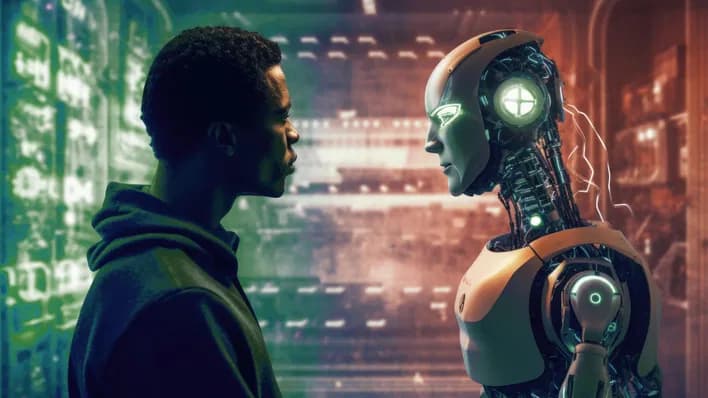
On any given day, a student uses an app to summarise notes, a designer experiments with an image generator, and a small business owner drafts emails with a writing assistant. None of this feels dramatic. And yet, behind these quiet moments sits a big, uncomfortable question: are AI tools here to replace human jobs, or are they simply helping people work better?
This debate is no longer limited to tech conferences or boardrooms. It is being discussed in classrooms, offices, newsrooms, and even at family dinner tables. People are not just curious. They are concerned. Jobs are personal. They pay bills, shape identity, and offer security. So when software starts doing parts of that work, it naturally raises anxiety.
This article looks at what AI tools actually do today, where they help, where they fall short, and what this shift means for workers, students, creators, and businesses.
Background: The Rise of Everyday AI Tools
Over the past few years, AI tools have moved from research labs into daily life. They now help write text, analyse data, design graphics, translate languages, and even write basic code. Many of these tools are easy to use and cheap, or even free.
“AI has quietly become a general-purpose work tool, much like email or spreadsheets once did.”
This change matters right now because adoption is no longer limited to big companies. Freelancers, students, small shops, and local offices are using these tools. The speed of this shift is what makes people uneasy. When technology spreads slowly, workers adapt over time. When it spreads fast, the fear of being left behind grows.
What AI Tools Actually Do
Despite the hype, most AI tools today are not independent workers. They are assistants. They work best when a human gives clear instructions and checks the results.
In simple terms, today’s popular AI tools can:
- Write drafts of text, emails, and reports
- Summarise long documents or videos
- Generate images, designs, or presentations from prompts
- Help write and debug basic code
- Analyse data and point out patterns
- Translate and rewrite content in different styles or languages
They are good at speed and scale. They can produce a first draft in seconds, scan thousands of lines of data quickly, or generate many design ideas at once. But they do not truly understand context the way humans do, and they still make mistakes that need human correction.
Real-World Use Cases
Students:
Students use AI tools to explain difficult topics, summarise chapters, and practise writing. For many, this feels like having a patient tutor available at any hour. But the final learning still depends on the student. The tool can guide, not replace, the thinking process.
Creators and Writers:
Writers, video creators, and designers often use AI for brainstorming, rough drafts, or quick visuals. It saves time on routine tasks, but the voice, judgement, and final polish still come from the human. Most professionals treat these tools like a fast sketchpad, not a finished product.
Businesses:
Small businesses use AI to draft marketing copy, reply to customer queries, and organise data. Larger companies use it to speed up research, reporting, and internal documentation. In most cases, it reduces workload rather than removing the need for staff.
Developers and Analysts:
Programmers use AI to suggest code, spot bugs, and explain unfamiliar functions. Data teams use it to explore trends faster. The tools act more like a helpful colleague who works quickly but still needs supervision.
Are Jobs Being Replaced or Reshaped?
The honest answer is: both, but not equally.
Some tasks are clearly being automated. Simple data entry, basic content rewriting, routine customer support replies, and repetitive reporting are now often handled by software. In these areas, fewer people may be needed.
But most jobs are not just a single task. They are a mix of judgement, communication, creativity, and responsibility. AI tools usually take over the boring or repetitive parts, not the whole role.
For example, a journalist may use AI to summarise documents, but still needs to interview sources, verify facts, and decide what truly matters. A designer may use AI to generate ideas, but still chooses the final direction and understands the client’s needs. A teacher may use AI to prepare material faster, but still guides, motivates, and evaluates students.
In other words, many jobs are being reshaped rather than erased.
Pros and Cons: A Balanced View
Pros
- Time-saving: Routine work gets done faster.
- Lower barriers: Small teams can do work that once needed big budgets.
- Productivity boost: People can focus more on strategy, ideas, and decisions.
- Accessibility: Non-experts can handle complex tasks with guidance.
Cons
- Job pressure: Some roles, especially repetitive ones, are at risk.
- Quality risks: AI can produce confident but wrong answers.
- Over-reliance: Skills may weaken if people stop thinking for themselves.
- Uneven impact: Not everyone benefits equally from the shift.
The biggest risk is not that machines will suddenly replace everyone. It is that some workers and sectors will be hit faster than others, without enough time or support to adapt.
Impact & Who Should Use It
Who benefits most?
- Students who want clearer explanations and faster revision
- Creators who need help with drafts and ideas
- Small businesses that lack big teams
- Professionals who handle large amounts of information
How work is changing:
Work is becoming more about directing, checking, and improving outputs rather than producing everything from scratch. Knowing how to ask good questions, spot errors, and apply judgement is becoming more valuable than just doing routine tasks.
In studies, it changes how people prepare assignments. In business, it speeds up decision-making. In content creation, it shortens the gap between idea and execution. The human role shifts from “do everything” to “guide, review, and decide.”
Conclusion: A Quiet but Lasting Shift
AI tools are not a sudden job-ending wave. They are more like a slow, steady change in how work gets done. Some tasks will disappear. New ones will appear. Most roles will simply change shape.
The real divide will not be between humans and machines, but between people who learn to work with these tools and those who do not. History shows that technology rarely removes the need for human judgement, empathy, and responsibility. It usually changes where those skills are used.
So the calmer, more realistic answer is this: AI tools are not here to replace people. They are here to change the way people work. And how well that change turns out will depend far more on choices made by workers, businesses, and institutions than on the tools themselves.