

Athena Intelligence
Athena is an AI-native analytics platform that automates complex data tasks, empowering teams to focus on strategic insights.
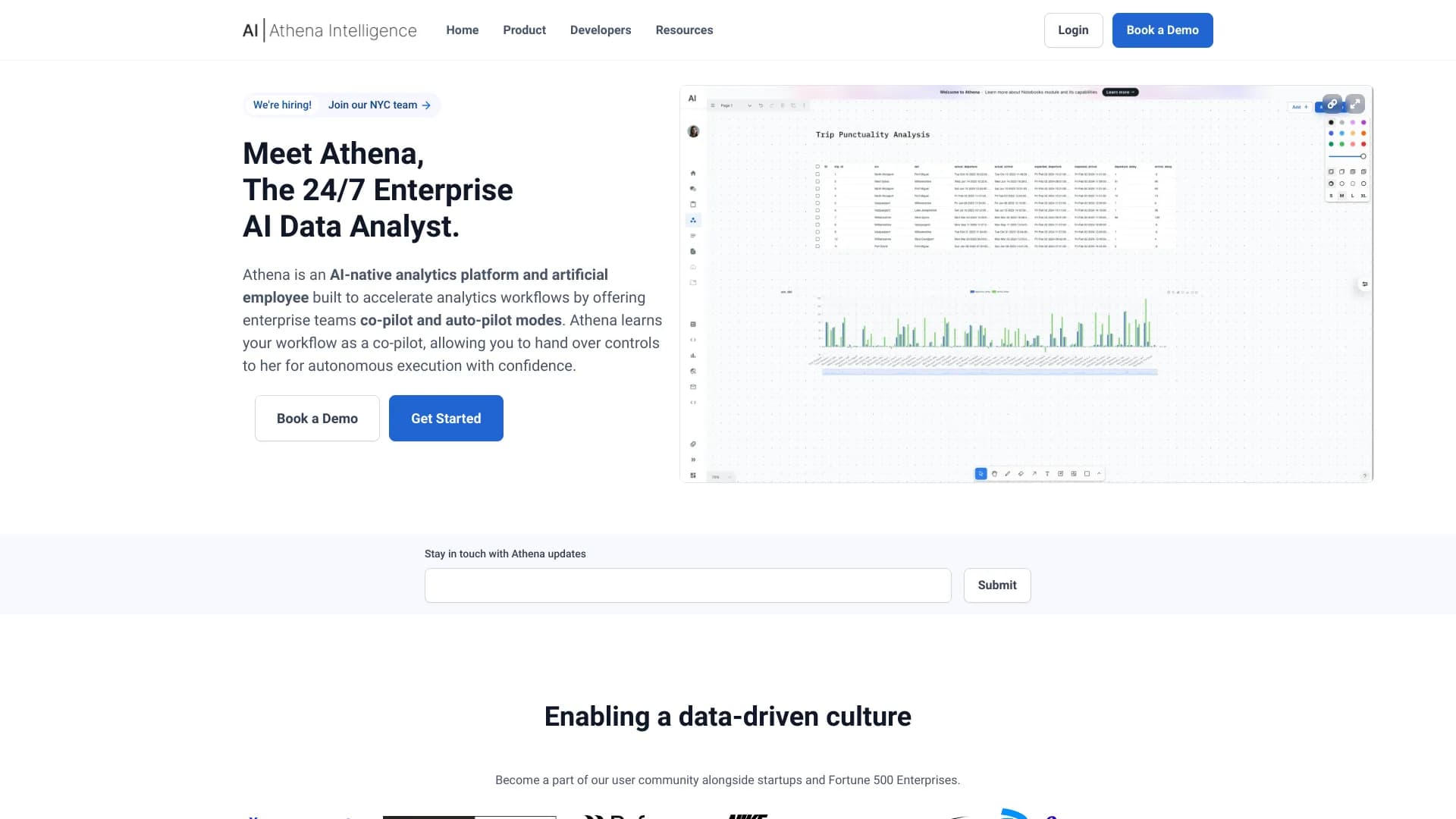
About Athena Intelligence
Athena is an advanced data science platform featuring an AI co-pilot and auto-pilot capabilities. It connects seamlessly to any database, enabling enterprise data teams to collaboratively design and execute customized workflows. With multi-modal Claude-3 integration and API access, Athena transforms data analysis by automating routine tasks, allowing analysts to concentrate on strategic initiatives. Positioned as an AI-native analytics solution, Athena acts as an artificial employee to streamline operations and enhance decision-making.
How to Use
Connect Athena to your existing database, then collaboratively develop and execute custom workflows using its API or Python SDK. Athena automates routine data tasks, freeing your team to focus on strategic analysis.
Features
- Collaborative platform designed for data teams
- Integration with multi-modal Claude-3 AI
- AI-driven data analysis and insights
- Seamless database connectivity
- Automated creation and management of workflows
- Compatibility with various enterprise data sources
- Secure deployment options including VPC
Use Cases
- Monitor performance metrics to identify top-selling SKUs and promotional strategies.
- Analyze consumer trends to gain deeper market insights.
- Automate document conversions and redactions for legal workflows.
- Track key products and strategic initiatives across regions.
- Generate comprehensive OBPPC (Occasion, Brand, Pack, Price, Channel) reports regularly.
- Optimize product mix through pack-price and volume analysis.
- Assess competitive positioning at company, product, and category levels.
- Extract actionable insights from market studies and consulting reports.
- Identify contractual risks and legal red flags during corporate audits.
- Streamline legal document review and compliance analysis.
- Summarize depositions, flag inconsistencies, and extract key points.
- Automate regulatory impact assessments on business operations.
- Track engagement metrics across media channels for marketing insights.
- Leverage data to improve brand positioning and media strategies.
- Extract critical information from large legal or financial documents.
- Optimize media distribution and outreach using analytics.
- Detect emerging market trends with advanced data analysis.
- Organize financial data for reporting and strategic planning.
- Provide weekly updates on competitive industry activities.
- Generate regular OBPPC reports with key insights.
- Create playbooks for analyzing customer and vendor contracts.
- Automate financial filings and compliance documentation.
- Extract financial guidance and sentiment from earnings reports.
- Develop targeted content strategies based on market research.
- Compare competitors’ offerings to refine strategic decisions.
- Evaluate key provisions in M&A deals for negotiation support.
Best For
Pros
- Seamlessly integrates with any database system
- Enables collaborative workflow development
- Supports integration with existing enterprise data sources
- Offers secure deployment options such as VPC
- Automates routine and complex data analysis tasks
- Facilitates real-time team collaboration
- Provides comprehensive audit trails and version control
Cons
- May require technical expertise to set up workflows
- Early access features might be limited or evolving
- Requires integration with current enterprise systems