

AutoFlow
An advanced Graph RAG-powered conversational knowledge base designed specifically for TiDB.
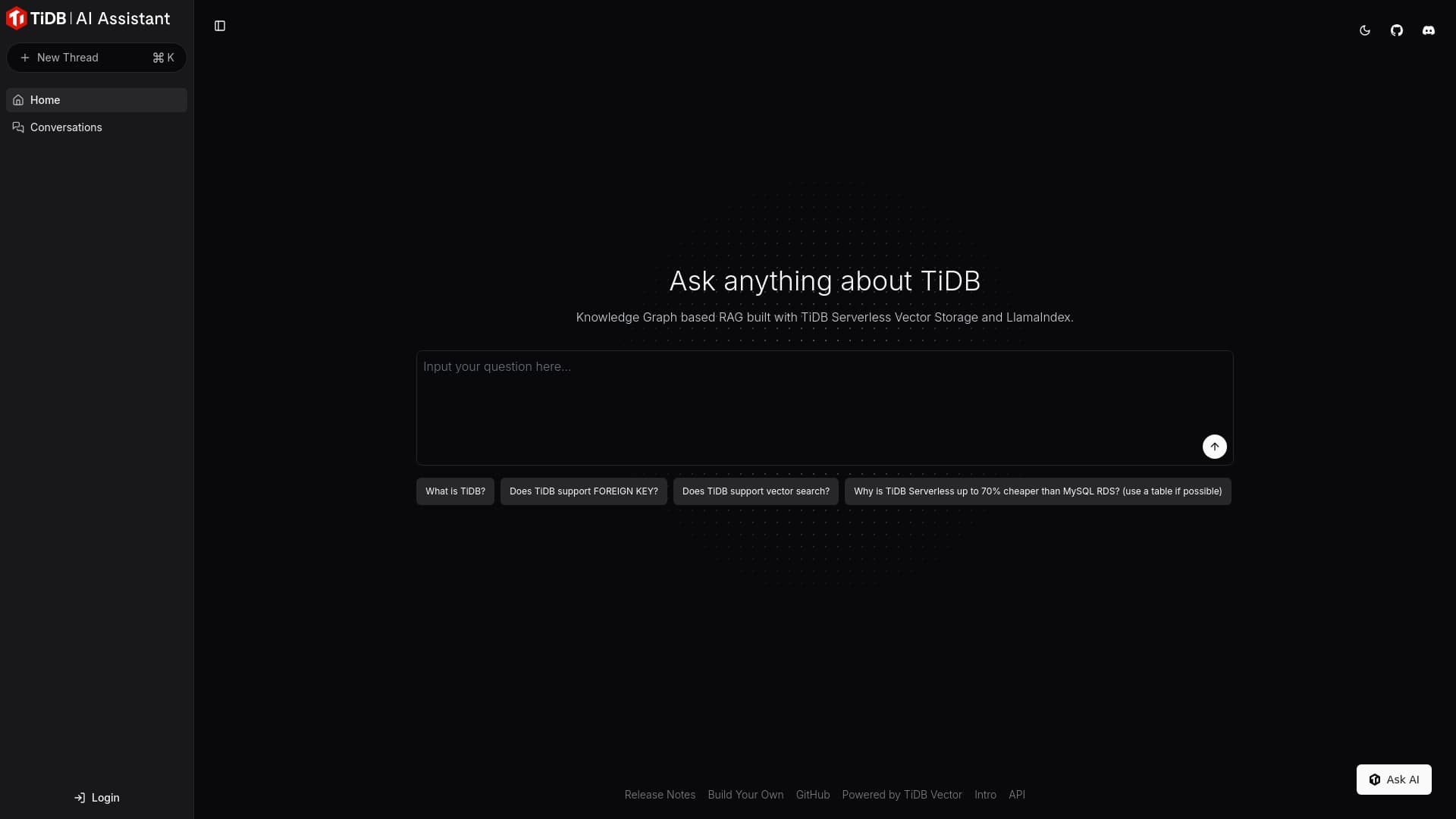
About AutoFlow
AutoFlow is a sophisticated conversational knowledge platform built on Graph RAG technology, utilizing TiDB Serverless Vector Storage and LlamaIndex. It enables users to ask questions about TiDB and delivers accurate answers derived from a structured knowledge graph.
How to Use
Type your questions about TiDB into the input box. The system leverages a knowledge graph and RAG technology to generate precise, relevant responses.
Features
- Powered by Graph RAG (Retrieval-Augmented Generation) technology
- Interactive conversational knowledge base
- Built with TiDB Serverless Vector Storage and LlamaIndex for scalability
Use Cases
- Creating a knowledge graph from TiDB documentation
- Answering technical questions about TiDB
- Enabling a conversational interface for TiDB support
Best For
TiDB developersDatabase administratorsIT professionals interested in TiDBData engineers working with TiDBTechnical support teams
Pros
- Provides highly accurate answers using a structured knowledge graph
- Scalable architecture with TiDB Serverless Vector Storage
- Offers an intuitive conversational interface for TiDB documentation
Cons
- Response accuracy depends on the quality of the knowledge graph
- Limited to questions related to TiDB
FAQs
What is AutoFlow?
AutoFlow is a conversational knowledge platform utilizing Graph RAG technology with TiDB Serverless Vector Storage and LlamaIndex.
How does AutoFlow work?
AutoFlow uses a knowledge graph and RAG technology to provide relevant, accurate answers to your questions about TiDB.
What topics can I ask about in AutoFlow?
You can inquire about any aspect of TiDB, including its features, setup, and best practices.
Is AutoFlow suitable for technical teams?
Yes, it is designed for developers, database administrators, and IT professionals working with TiDB.
Can AutoFlow answer questions beyond TiDB?
No, AutoFlow's knowledge base is specific to TiDB and related topics.