

Cloudglue
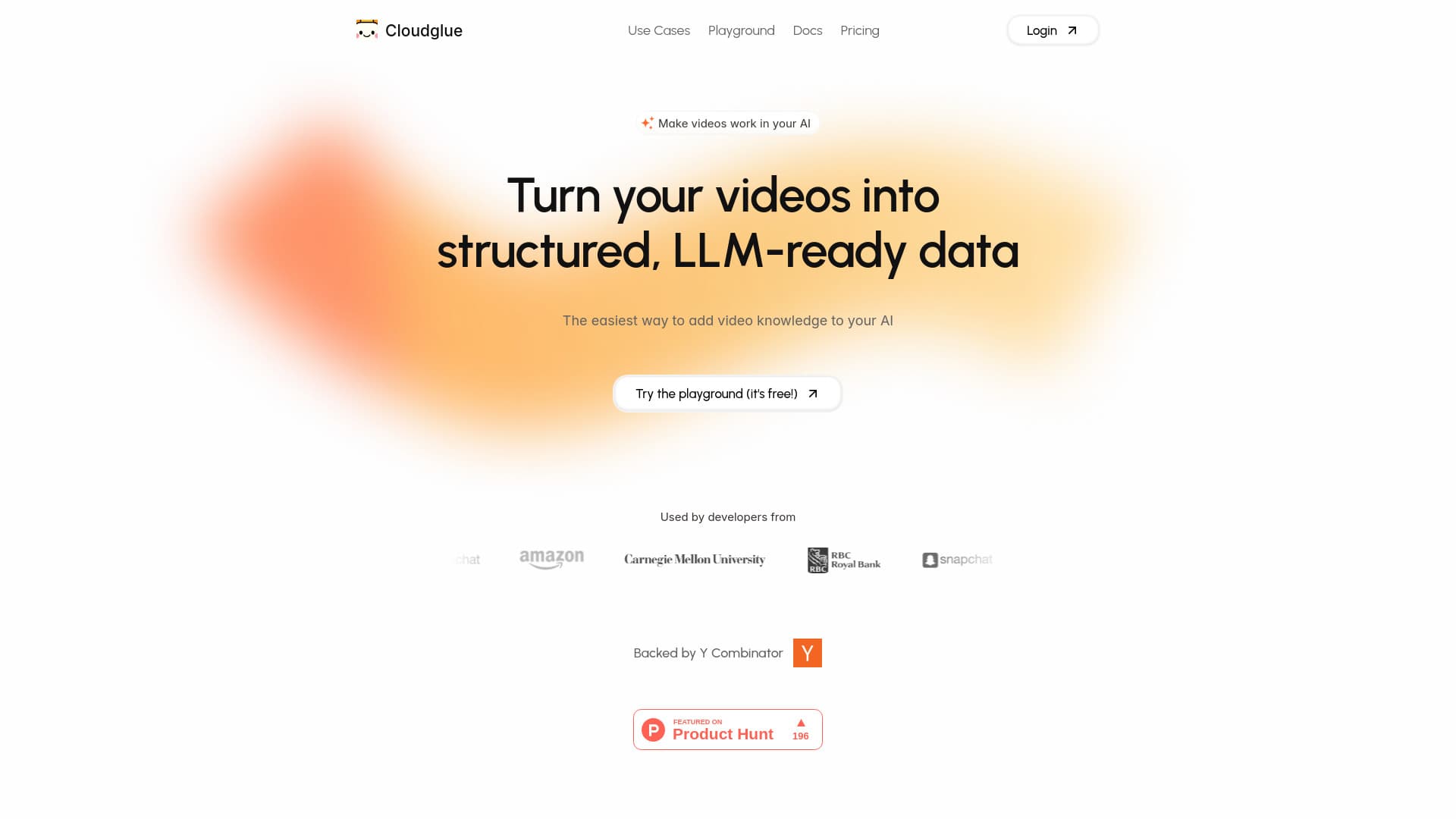
Transforms video and audio content into structured, large language model-ready data for advanced AI applications.
About Cloudglue
Cloudglue APIs convert video and audio files into structured, AI-compatible data, enabling the development of intelligent agents that can interpret multimedia content. It simplifies the process of transforming extensive video libraries—from meetings to product demos—into easily accessible, structured data using fast, developer-friendly interfaces.
How to Use
Use Cloudglue through easy-to-integrate APIs. Start with a single API call for managed video Q&A, or take control with segment-by-segment embedding to customize data extraction. Seamlessly turn your entire video collection into structured, AI-compatible information.
Features
- Supported by Y Combinator, ensuring credibility
- Simple setup with a single API call, eliminating complex RAG tasks
- Enterprise-grade, ready for production deployment
- Designed specifically for video-native AI applications
- Exceptional speed: index 50-minute videos in just 3 minutes
- Flexible control over understanding levels, from transcripts to multimodal insights
- Enable full video searchability across diverse domains such as sales and product demos
Use Cases
- Power chatbots and RAG systems to answer video-related questions
- Create comprehensive knowledge graphs from multimedia content
- Implement search features across large video collections
- Perform aggregate analysis of video libraries for insights
Best For
Pros
- Simple setup with a single API call for quick integration
- Supported by Y Combinator, ensuring startup credibility
- Fast, developer-focused APIs for efficient workflows
- Enterprise-ready, robust for production environments
- Enables comprehensive video search across multiple domains
- Provides rapid indexing speeds for large video libraries
- Offers detailed control over data extraction levels
- Transforms multimedia into structured, AI-compatible data
- Automates complex video processing tasks efficiently
Cons
- No specific disadvantages are outlined in the available information.
Pricing Plans
Choose the perfect plan. All plans include 24/7 support.
Mini
Offers 1,000 Credits, 1,000 chat requests, and indexing for 2 hours of video
Get StartedBuilder
Includes 30,000 Credits, 30,000 chat requests, and indexing for 63 hours of video
Get StartedScale
Provides 60,000 Credits, 60,000 chat requests, and indexing for 125 hours of video
Get StartedEnterprise
Custom pricing plans and discounts tailored for large teams and enterprise needs
Get Started