

Currux Vision - AI Driving Assistant
Autonomous AI solutions designed for intelligent infrastructure, traffic management, and law enforcement applications.
About Currux Vision - AI Driving Assistant
Currux Vision develops autonomous AI platforms for modern infrastructure and traffic systems. Their solutions assist cities, defense agencies, government bodies, and infrastructure developers in monitoring, optimizing, and monetizing complex projects. These systems operate locally at the edge or in the cloud, leveraging existing CCTV, traffic controllers, and sensors. They provide AI-driven tools for traffic enforcement, smart city operations, and automated law enforcement initiatives.
How to Use
Currux Vision provides plug-and-play Edge AI servers that operate within local networks, eliminating the need for cloud connectivity. Install these AI servers at traffic cabinets or local server rooms to process data locally, then transmit metadata within the network. Alternatively, deploy a hybrid setup combining edge and cloud processing or utilize Currux Vision's cloud servers for real-time video analysis.
Features
- Flexible processing options: edge and cloud-based
- Autonomous control of cameras with PTZ and object tracking
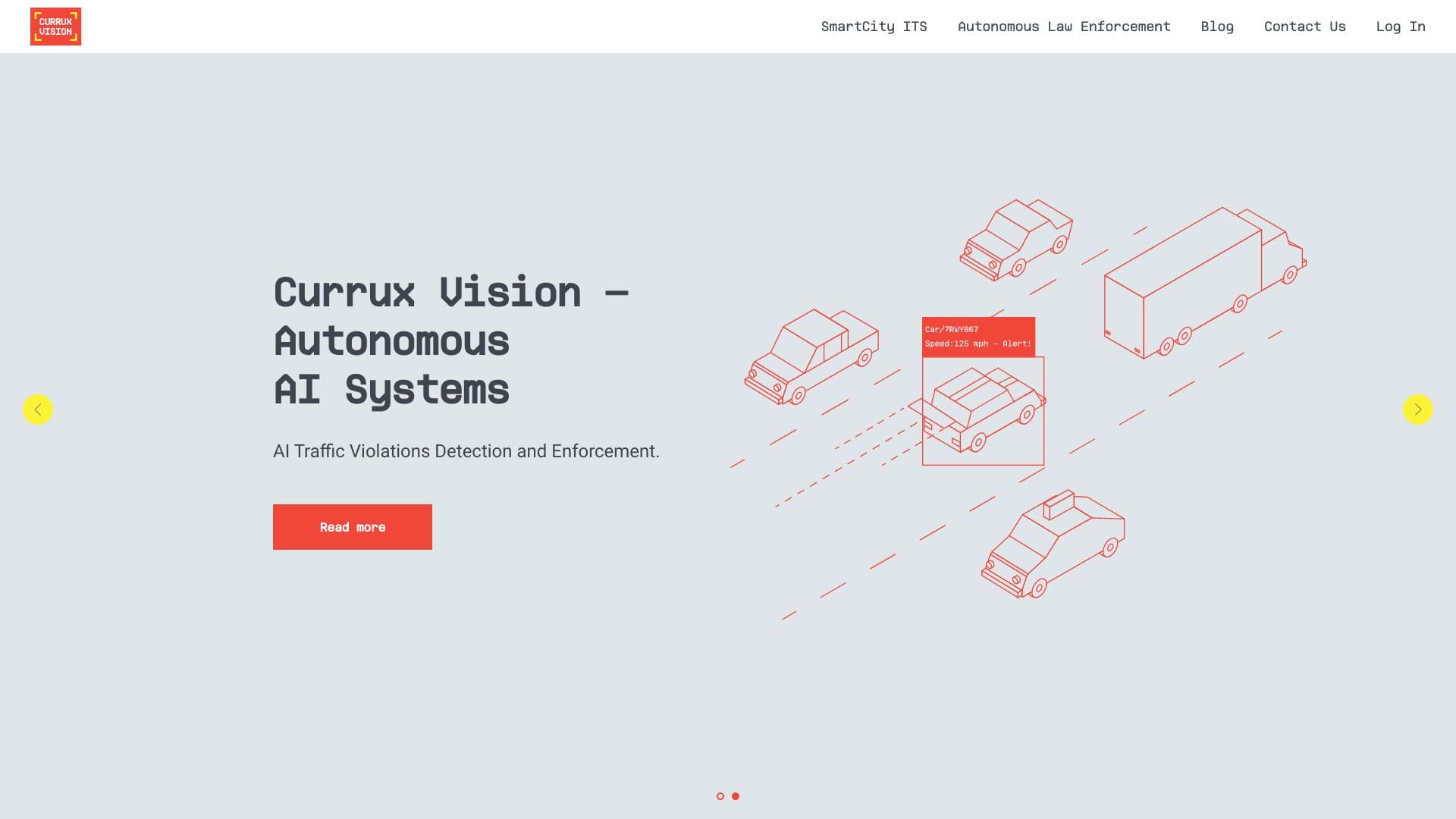
- AI-powered traffic enforcement and monitoring
- Vehicle, cyclist, and pedestrian detection and classification
- Smart location management and safety platform
- Traffic analytics with near-miss and safety notifications
Use Cases
- Detecting and enforcing traffic violations like speeding and red-light running
- Enhancing road safety by identifying dangerous behaviors and dispatching enforcement
- Implementing intelligent transportation systems (ITS)
- Optimizing infrastructure operations through AI-driven monitoring and control
- Maximizing existing camera systems for improved efficiency and flexibility
Best For
Pros
- Leverages existing CCTV, sensors, and traffic controllers
- Enhances safety and operational efficiency
- Provides comprehensive traffic analytics and reports
- Supports both edge and cloud processing options
- Offers adaptable configurations for diverse environments
Cons
- Initial setup may require investment in AI servers
- Performance depends on the quality of existing camera infrastructure
- Cloud processing may involve recurring costs