

Levity
AI-powered platform that automates email and document classification to optimize workflows and boost productivity.
About Levity
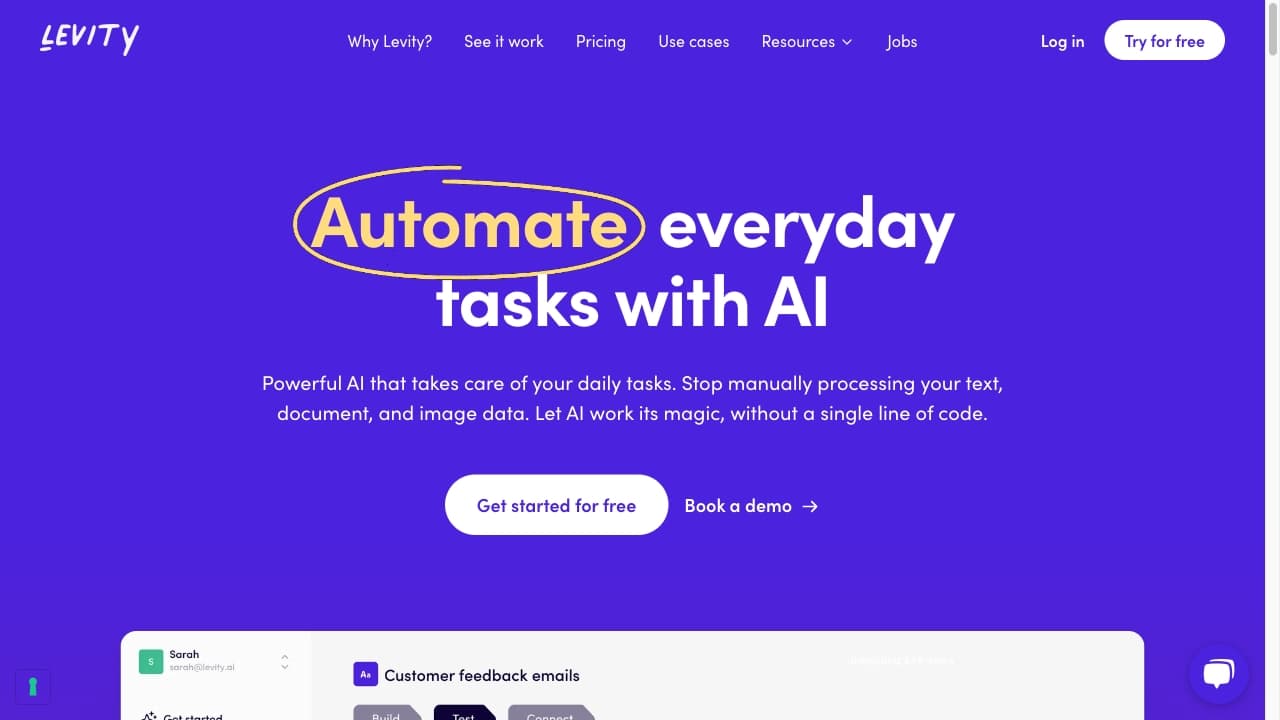
Levity enables non-technical users to develop AI models for classifying text, images, and documents, streamlining routine tasks. It enhances freight email operations by automatically sorting emails and attachments into custom categories for efficient routing and prioritization, eliminating manual tagging. Levity seamlessly integrates with inboxes to extract information and trigger automated actions, allowing teams to focus more on customer engagement and strategic work.
How to Use
Users can select from pre-built flow templates or train custom AI models using their own data. Levity connects with email inboxes, extracts relevant information, and automates follow-up actions based on user-defined categories.
Features
- Automates email and document workflow processes
- AI-powered classification for text, images, and documents
- PhoneAI agents facilitate outbound calls and sales activities
- Includes ready-made templates and custom model creation options
- Integrates smoothly with TMS (Transportation Management System)
Use Cases
- Managing document workflows
- Generating actionable analytics
- Categorizing product inventory data
- Tracking shipments and deliveries
- Processing orders efficiently
- Automatically labeling potential clients in outbound emails
- Analyzing customer survey feedback
- Moderating online content
- Automating freight quoting procedures
- Routing customer support tickets
Best For
Pros
- Offers both ready-to-use templates and customizable AI models
- PhoneAI agents improve outbound communication and sales efforts
- Reduces manual, repetitive tasks to save time and mental energy
- Enables non-technical users to build effective AI classifiers
- Provides comprehensive email operation insights with real-time analytics
- Seamlessly integrates with existing logistics and TMS tools
Cons
- Learning curve for new users unfamiliar with AI tools
- Pricing might be a concern for smaller organizations
- Model accuracy depends on quality and quantity of training data