

parlayideas.com
An AI-driven platform designed to facilitate engaging class discussions and boost student participation across various learning environments.
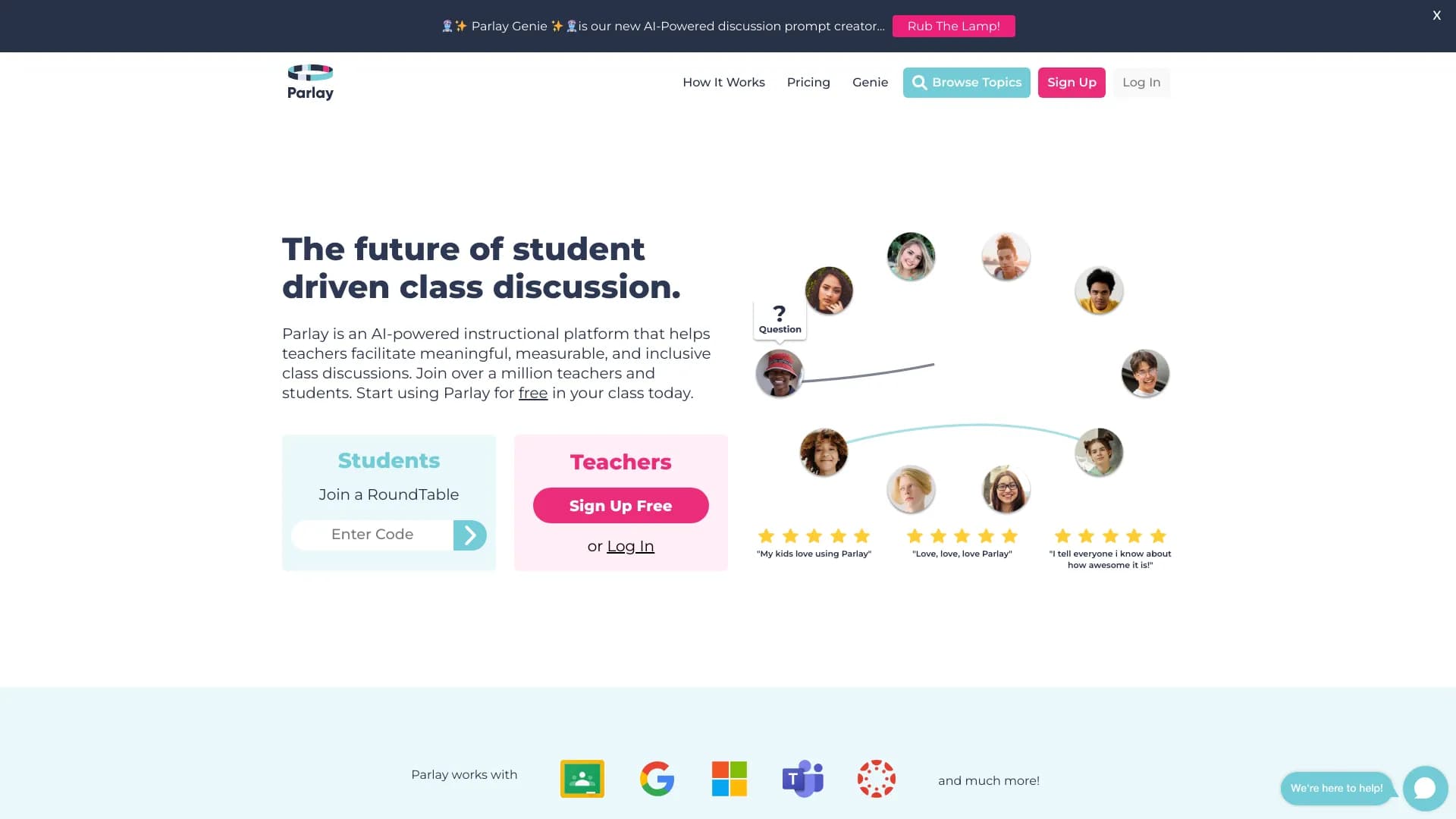
About parlayideas.com
Parlay Ideas is an AI-enhanced instructional platform crafted to promote meaningful, measurable, and inclusive classroom discussions. It features tools for both written and verbal interactions, AI-generated prompts, and a comprehensive library of discussion topics. The platform aims to increase student engagement, monitor participation, and foster critical thinking skills in educational settings.
How to Use
Educators can create new discussion topics or log in to access existing ones. Students participate by joining RoundTables, engaging in threaded discussions, providing peer feedback, and utilizing AI-generated prompts to guide conversations.
Features
- Parlay Genie: An AI-powered tool that creates discussion prompts and follow-up questions to deepen student engagement.
- Written RoundTables: Interactive threaded discussion boards with options for peer feedback and model submissions.
- Verbal RoundTables: Supports Socratic seminars by facilitating and tracking student participation and dialogue quality.
- RoundTable Sequences: Organized discussions that build on prior ideas, enhancing critical thinking.
- Parlay Universe: A vast library containing over 5,000 discussion prompts created by educators worldwide.
Use Cases
- Leading discussions on historical topics like the First Thanksgiving.
- Encouraging creative writing and storytelling in the classroom.
- Conducting weekly check-ins to assess student understanding and well-being.
- Facilitating debates on controversial issues to develop critical thinking skills.
Best For
Pros
- Provides AI-generated prompts to stimulate deeper classroom discussions.
- Seamlessly integrates with popular LMS and SIS platforms.
- Tracks student participation, engagement, and skill development over time.
- Enhances both verbal and written classroom interactions.
- Supports inclusive and measurable discussions tailored to diverse learners.
Cons
- Initial setup and teacher training may be required for optimal use.
- Discussion quality depends heavily on prompt design and facilitation skills.
- Reliance on technology may pose challenges in low-bandwidth environments.