

Roe AI
A comprehensive SQL-based platform designed for managing unstructured risk data workflows with integrated AI agents.
About Roe AI
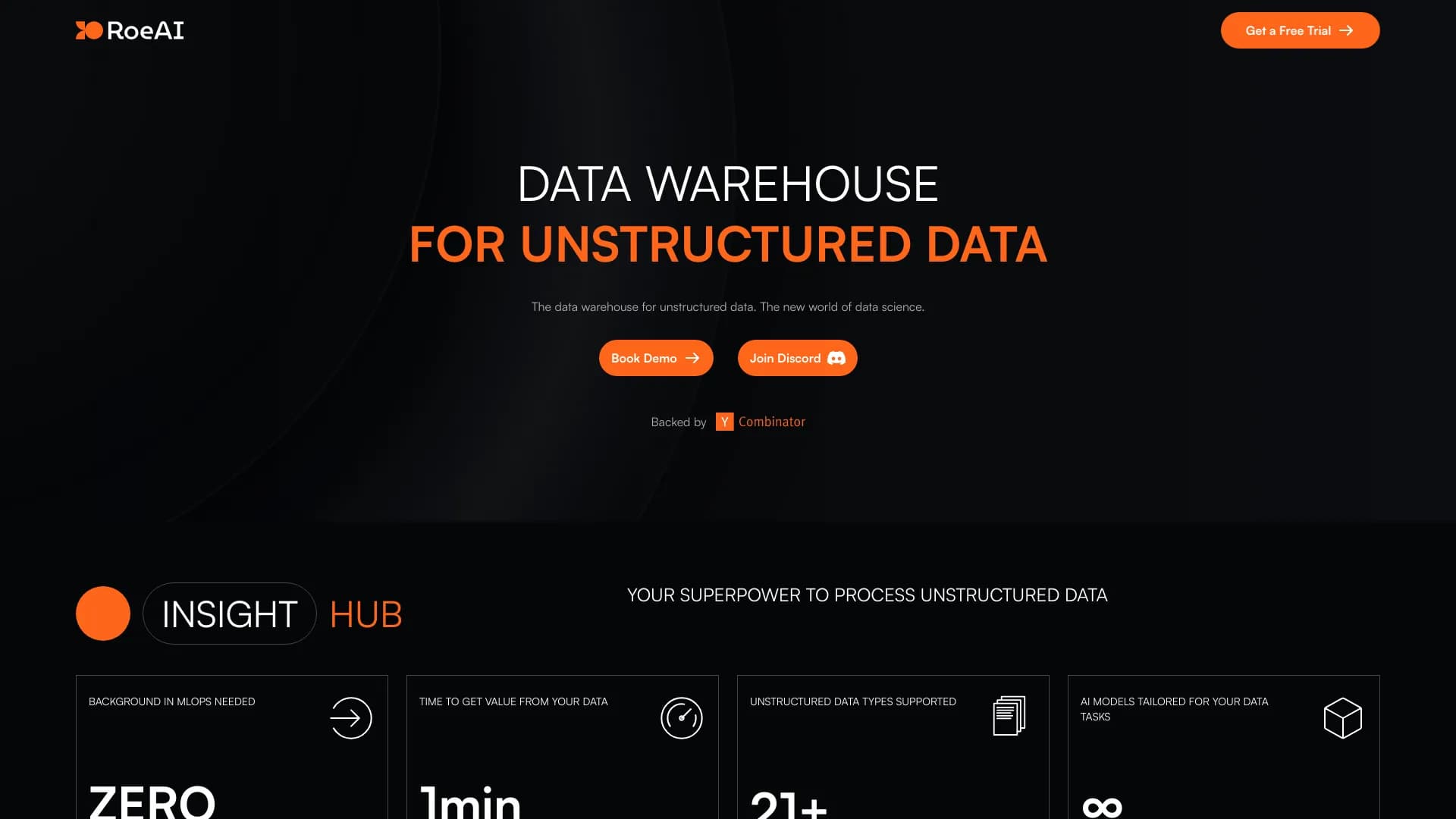
Roe AI offers a powerful data platform tailored for unstructured data workflows in risk management and compliance. It features a SQL environment that enables building complex data processes for sectors like e-commerce, fintech, and banking. Utilizing AI agents, Roe AI efficiently gathers and interprets regulatory intelligence from online sources, detects restricted products, and maps a seller’s entire digital footprint. It converts complex financial filings into structured datasets, facilitating in-depth analysis using SQL and AI-driven insights.
How to Use
Users can define custom AI agent behaviors, execute these agents on websites via SQL commands, and develop sophisticated risk management workflows. The platform allows creating tailored AI agents, running them on specific URLs through SQL, and integrating seamlessly with data pipelines like DBT, Airflow, and Snowflake.
Features
- Advanced risk data analytics
- AI-driven data workflow automation
- Automated merchant compliance labeling
- Extraction of financial and legal documents
- SQL-based platform optimized for unstructured data
- Customizable AI agents for data collection and analysis
Use Cases
- Merchant compliance monitoring
- Enforcing prohibited business policies
- Crypto asset risk assessment
- Market data collection and analysis
- Financial document extraction
- Loss data analysis
- E-commerce risk evaluation and growth insights
- Investment compliance monitoring
- Insurance market analytics
Best For
Pros
- Capable of processing large volumes of documents efficiently
- Built on a scalable parallel processing architecture
- Maintains high quality at scale
- Provides transparent results through accessible SQL queries
- Offers customizable AI agents for specific needs
- Easily integrates with existing data pipelines
Cons
- May require familiarity with SQL
- Dependent on the accuracy of AI agents
- Potential bias in unstructured data sources